
Diamond Appraisals in Boca Raton
Home / Diamond Appraisals in Boca Raton
Professional Diamond & Jewelry Appraisals in Boca Raton
When you need an accurate diamond appraisal in Boca Raton, David Stern Jewelers delivers the expertise and precision the document has to carry. With more than forty years serving South Florida families, our GIA certified gemologist prepares appraisals for insurance coverage, estate planning, divorce settlements and fair market assessments.
Every diamond appraisal covers the stone and its setting. A GIA certified gemologist grades the diamond on the Four Cs, records its measurements and anything else that affects value, and documents the mounting so the report describes exactly what you own. Our team also prepares fine jewelry appraisals for the rest of your collection.
Unlike automated online estimates, every evaluation is performed on professional gemological equipment in our Boca Raton showroom, and most appraisals are completed while you watch. Your jewelry never leaves your sight, and you leave with documentation and a clear explanation of how the value was reached.
Why a professional appraisal matters
Documentation your insurer and the courts will accept
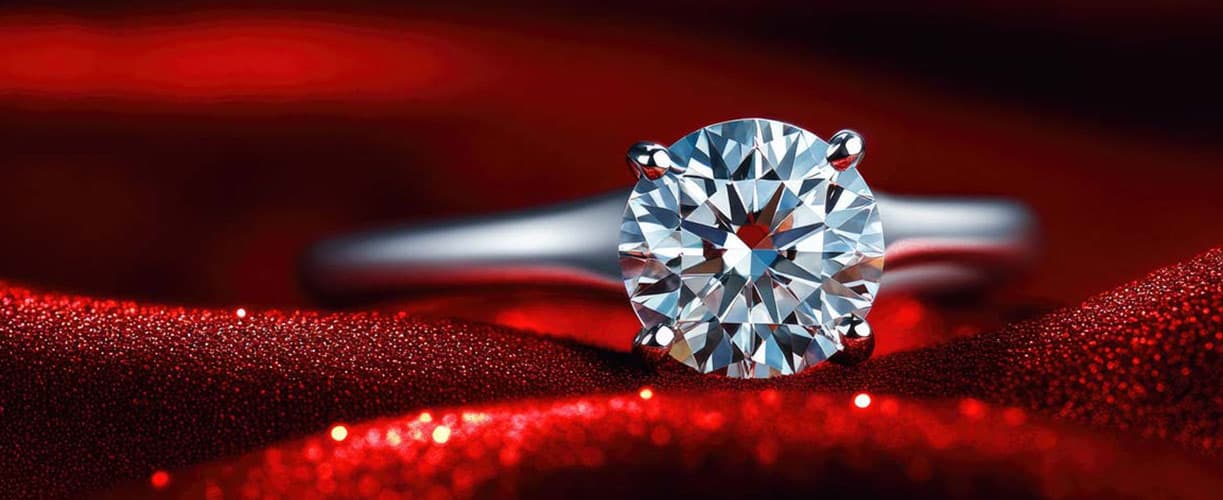
Fine jewelry carries both financial and irreplaceable sentimental value. Without proper appraisal documentation you risk being underinsured, and a claim can pay out a fraction of what replacing the piece actually costs.
Our insurance appraisals state replacement value with precise descriptions of metal purity, gemstone characteristics graded on the Four Cs, and current retail market conditions, formatted to meet the standards of the carriers serving South Florida.
Estate work is different. Probate and estate appraisals reflect fair market value, comply with IRS requirements and provide court-admissible documentation for equitable distribution, estate tax calculation and settlement, including date-of-death valuations, photographs and methodology explanations.
What we appraise
A diamond appraiser for every shape and setting
From a single loose stone to a full estate collection, every diamond appraisal starts with the same careful grading. These are the pieces we see most often in our Boca Raton showroom, and each one receives its own measurements, grades and photographs.
Engagement rings and bridal sets
The center stone is measured and graded on the Four Cs, side stones and pavé are counted and estimated by total weight, and the mounting is documented by metal, purity and style. Matching wedding bands are appraised with the ring so the set is insured as a set.
Loose diamonds
Unmounted stones can be graded most precisely, because no prongs hide the girdle, pavilion or inclusions. Loose diamonds of one carat or larger are also the best candidates for an independent GIA laboratory report.
Earrings, pendants and tennis bracelets
Diamond studs are graded stone by stone and described as a matched pair, while pendants, line bracelets and riviera necklaces are documented by stone count, total carat weight, average grades and setting style so a replacement can be sourced accurately.
Fancy color diamonds
Yellow, pink, blue and other fancy color diamonds are valued mainly on the hue, tone and saturation of their color rather than the D to Z scale. We describe the color carefully and recommend a laboratory report wherever color origin needs confirmation.
Antique and old-cut diamonds
Old mine and old European cuts, rose cuts and period settings are graded against their own standards and valued for rarity and craftsmanship as well as weight. For inherited collections, see our probate jewelry appraisals.
Lab-grown diamonds
Laboratory-grown diamonds are appraised at their current replacement cost, which differs sharply from natural diamonds of similar grades. Getting origin right is essential, so any existing laboratory report or girdle inscription is checked against the stone.
Credentials and equipment
A GIA certified gemologist and calibrated instruments
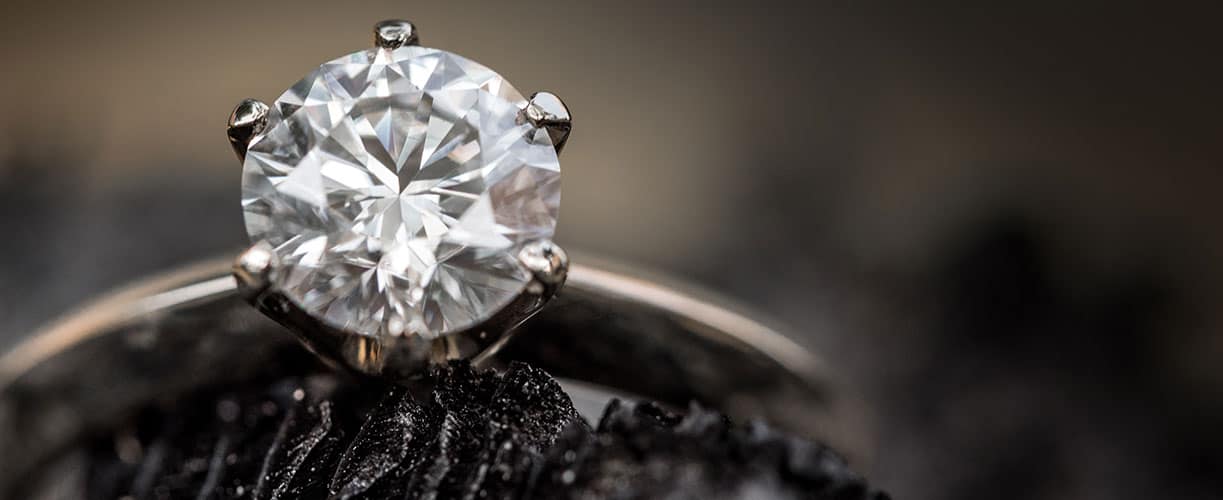
Our GIA certified gemologist has completed intensive training in diamond grading, colored stone identification and appraisal methodology through the Gemological Institute of America. Our appraisers hold American Society of Appraisers membership and follow the Uniform Standards of Professional Appraisal Practice.
The Boca Raton facility is equipped with gemological microscopes for inclusion mapping and authenticity verification, X-ray fluorescence and acid testing for metal identification, diamond and thermal conductivity testers to rule out simulants, and scales calibrated to 0.01 grams.
Four decades of local work means we know Palm Beach County probate requirements, the standards of the insurance carriers serving this area, and the South Florida luxury market where certain designers command premiums they would not command elsewhere.
Diamond grading
Diamond grading: the Four Cs and what each one does to value
Cut
Cut governs how effectively a diamond returns light, and it is the single largest driver of visible beauty. Grades run from Excellent to Poor, and superior cuts command premiums because they maximize optical performance. Our diamond cut guide explains each grade.
Color
White diamonds are graded from D (colorless) through Z (light yellow or brown). D, E and F are the rarest and most valuable, while G through J offer strong value with differences that are often invisible to the untrained eye. See our diamond color guide for the full scale.
Clarity
Inclusions and blemishes are assessed at 10x magnification, from Flawless down through the Included grades. Many VS and SI stones are eye-clean while costing substantially less than flawless material. Our Four Cs guide covers every clarity grade.
Carat weight
One carat equals 200 milligrams. Larger stones are exponentially rarer, so a two-carat diamond typically carries three to four times the per-carat value of a one-carat stone rather than simply double the price. Read more in our carat weight guide.
Beyond the Four Cs
Diamond grading details that move the appraised value
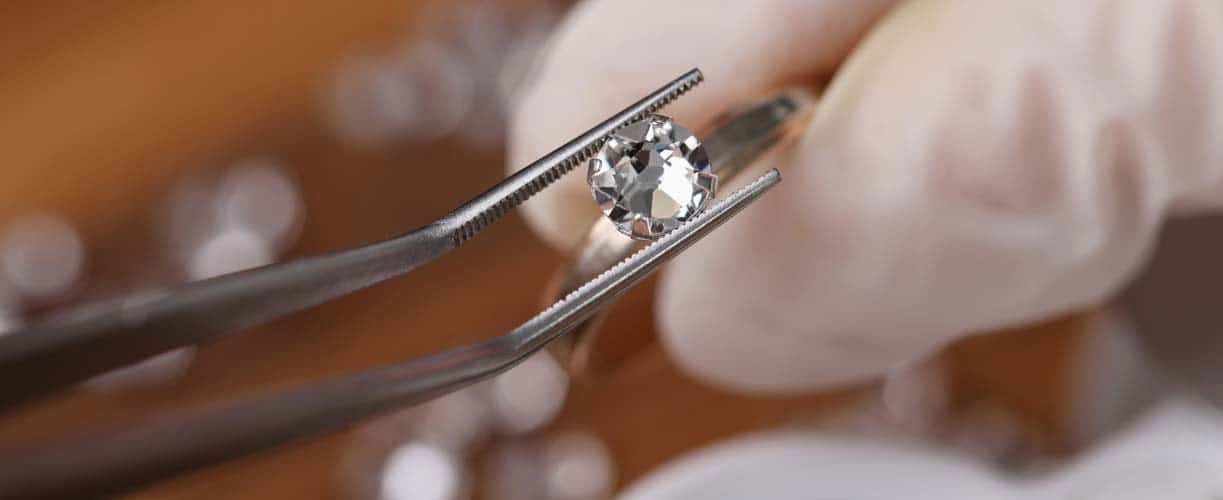
The Four Cs set the foundation, but two diamonds with identical grades can still carry different values. Polish and symmetry, table and depth percentages, girdle thickness and crown and pavilion angles all shape how a stone performs, and each one is measured and recorded in the report.
Fluorescence is noted because strong blue fluorescence can make some higher-color diamonds look hazy and trade at a discount, while in lower colors it can be neutral or even helpful. Chips, abrasions and wear on older stones are documented too, since condition affects both replacement cost and fair market value.
Shape matters as well. Round brilliants typically command a premium over oval, cushion, emerald and pear shapes of the same weight, and fancy shapes are judged on their own length-to-width ratios. Learn more in our diamond education library or the GIA 4Cs guide.
How the process works
Four steps, and the two appraisal types we issue
Every appraisal follows the same disciplined sequence, and the purpose you bring us determines which type of value the final report states.
Step 1 — Consultation and assessment
We start by establishing the purpose of the appraisal, because insurance work uses replacement value while estate work requires fair market value. A preliminary look at your pieces gives you a time and cost estimate up front.
Step 2 — Gemological evaluation
Metal purity and weight are tested and recorded, every diamond and gemstone is measured and graded under magnification, and hallmarks, maker’s marks and designer signatures are identified and researched.
Step 3 — Market research
We apply daily precious metal spot prices, reference wholesale diamond pricing from industry databases, and study recent comparable sales, auction results and brand-specific demand across regional and national markets.
Step 4 — Documentation and reporting
You receive a written report with precise descriptions, full gemological grading, high-resolution photographs, the stated value and purpose, our credentials, methodology and a recommended reappraisal timeline.
Insurance appraisals
Replacement-value documentation formatted to meet carrier standards, detailing metal purity and the Four Cs for every diamond so claims are processed without dispute or delay.
Estate and probate appraisals
Date-of-death fair market valuations that comply with IRS requirements and Palm Beach County probate standards, with photographs and methodology that hold up under legal review.
Know the difference
Diamond appraisal, lab report or selling offer: which do you need?
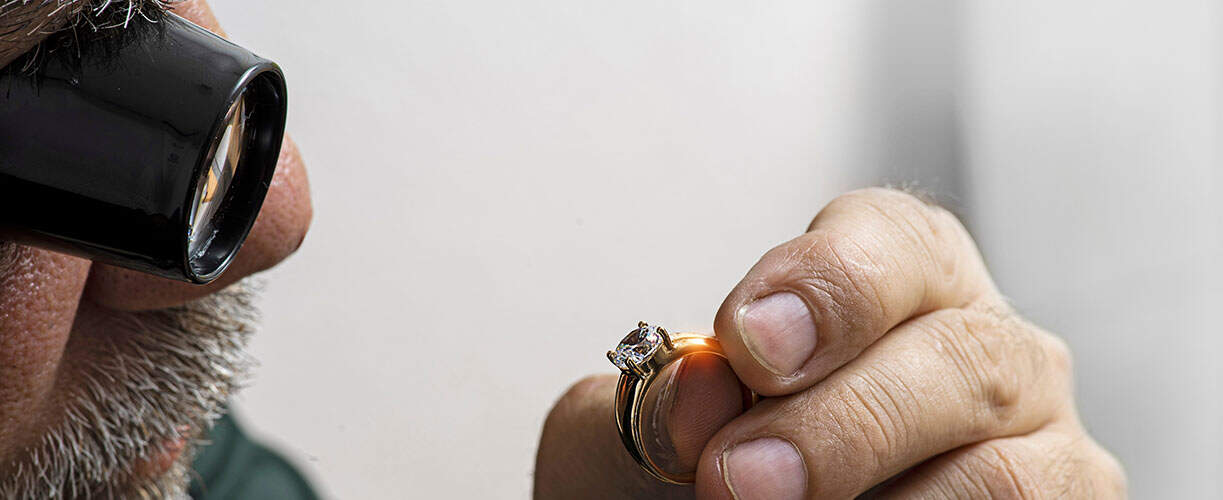
A GIA laboratory report describes a diamond’s identity and grades, but it states no value and never mentions the setting. It is a scientific document, and it is the strongest evidence of quality when a stone is sold or insured. Our GIA certified gemologist can arrange one for diamonds of one carat or larger.
A diamond appraisal builds on that grading and assigns a value for a stated purpose: replacement value for insurance, or fair market value for estates, divorce and donations. It covers the whole piece, including the mounting, and should be refreshed every three to five years as prices move.
A selling offer is different again. It reflects what a buyer can pay today, which is usually well below retail replacement value. If you are thinking about selling, start with an appraisal so you understand the piece, then compare offers, including ours on the sell your diamonds page.
GIA certified gemologist · USPAP compliant
Schedule your diamond appraisal today
21073 Powerline Rd, #37, Boca Raton, FL 33433. Monday through Friday 9:30am to 5:30pm, Saturday 10:30am to 4:30pm. Most standard appraisals are completed while you wait, so you leave the same day with professional documentation in hand.
Diamond Appraisal Questions
How long does a diamond appraisal take in Boca Raton?
Most standard appraisals of contemporary jewelry are completed the same day, often while you wait in our showroom. Larger collections, antique pieces requiring historical research, or items needing specialized testing may take several days so nothing is rushed.
What is the difference between an insurance appraisal and an estate appraisal?
An insurance appraisal states replacement value, the retail cost of buying a comparable new piece, so your carrier can cover a loss properly. An estate appraisal states fair market value as of a specific date, which is what the IRS and probate courts require. Using the wrong type can leave you underinsured or overtaxed.
Do I have to leave my jewelry with you?
No. Your jewelry never leaves your sight during the appraisal. Our gemologist works in front of you, explaining the metal testing, the grading of each stone and the market research behind the final figure.
What credentials do your appraisers hold?
Our appraisals are performed by a GIA certified gemologist trained in diamond grading, colored stone identification and appraisal methodology, and our appraisers hold membership in the American Society of Appraisers. All work follows the Uniform Standards of Professional Appraisal Practice.
What equipment do you use?
Gemological microscopes for inclusion mapping and authenticity verification at magnifications above 60x, X-ray fluorescence and traditional acid testing for metal identification, diamond and thermal conductivity testers to rule out simulants such as cubic zirconia and moissanite, scales calibrated to 0.01 grams, and professional photography equipment for documentation.
Can you arrange a GIA laboratory report?
Yes. For diamonds of one carat or larger we can arrange an independent GIA Laboratory Report, the global benchmark for diamond grading. GIA reports are recognized worldwide and add credibility for insurance, resale and peace of mind.
Is there a minimum value for a formal appraisal?
Formal written appraisals are best suited to items with an estimated value of $1,000 or more, so our detailed evaluation process is applied to assets where the documentation genuinely matters.
How often should I have my diamonds reappraised?
Every three to five years is a reasonable interval, and sooner for high-value pieces or during periods of sharp movement in gold and diamond markets. Every report we issue includes a recommended reappraisal timeline.
What should I bring to my appointment?
Bring the jewelry, plus any prior appraisals, receipts, lab reports, certificates of authenticity and provenance information you have. For estate work, include the death certificate and date of death. Missing paperwork does not prevent an accurate appraisal.
Will you buy my diamonds after the appraisal?
We can, but appraisal and purchase are kept separate so the valuation stays unbiased. If you decide to sell, our offers are based on metal content at spot pricing, gemstone quality and current demand, and brand premium for designer pieces, with the calculation explained line by line.
Can you tell if my diamond is natural or lab-grown?
Our instruments reliably separate diamonds from simulants such as cubic zirconia and moissanite. Separating natural from laboratory-grown diamond can require advanced laboratory testing, so when origin cannot be confirmed in the showroom we will say so plainly and can arrange a GIA laboratory report.
Does a GIA certificate replace a diamond appraisal?
No. A GIA report grades the diamond but does not state a value or describe the setting, and insurers need a dollar figure. Bring the report to your diamond appraisal and our GIA certified gemologist will confirm it matches the stone and use its grades as part of the valuation.
Why is my appraisal value higher than the offer I received?
An insurance appraisal states retail replacement value, the cost of buying a comparable piece new. An offer to buy reflects wholesale and resale market conditions, so it will almost always be lower. Both numbers are legitimate; they simply answer different questions.
Do you appraise diamonds bought online or from another jeweler?
Yes. We appraise diamonds from any source, and an independent appraisal soon after purchase is one of the best ways to confirm you received the quality you paid for and to set your insurance coverage correctly.
Can you appraise a diamond that is still set in jewelry?
Yes. Most diamonds we appraise are mounted. Color and clarity can be graded accurately in the setting, and weight is estimated from precise measurements using established formulas. If an exact weight matters, for example on a larger stone, the diamond can be unmounted and reset in our on-site workshop.
How do I read my diamond appraisal report?
Each report lists the description of the piece, its metal and purity, the measurements and Four Cs grades of every significant diamond, the total diamond weight, photographs, the purpose of the appraisal and the value stated for that purpose. We walk through the report with you before you leave so every line makes sense.
What happens if my diamond is lost or damaged after the appraisal?
Your appraisal gives your insurer a precise description of the diamond, its grades and a replacement value, which is what allows a claim to be settled with a stone of like kind and quality. Keep a copy of the report and its photographs somewhere other than where you store the jewelry.
Should I have my engagement ring appraised right after buying it?
Yes, ideally within the first few weeks. Many insurers expect documentation within 30 to 90 days of purchase, and an independent diamond appraisal confirms the grades on your receipt or laboratory report while the details of the sale are still fresh.
Do you appraise colored gemstones as well as diamonds?
Yes. Sapphires, rubies, emeralds and other colored stones are identified, measured and graded for color and clarity, and pieces that combine diamonds with colored gems are appraised as a whole, with every stone described in the report.
Why choose a local diamond appraiser in Boca Raton?
Your diamond is examined in person, in front of you, instead of being shipped away or judged from photographs. We know the requirements of South Florida insurers and Palm Beach County probate, and you can return to the same gemologist whenever the appraisal needs updating.
Visit us
21073 Powerline Rd, #37
Boca Raton, FL 33433
Mon to Fri 9:30 to 5:30
Saturday 10:30 to 4:30
Sunday Closed
Walk in any time for a free jewelry, gold or diamond evaluation. Book ahead for custom design consults and appraisals.