
Diamond carat weight
Carat weight measures mass, not size
One metric carat is 200 milligrams, divided into 100 points. What you see on the hand depends on how that weight was cut.
What diamond carat weight measures
Put simply, carat weight measures how much a diamond weighs. A metric carat is defined as 200 milligrams, and each carat is subdivided into 100 points, which allows very precise measurement to the hundredth decimal place.
A jeweler may describe a diamond below one carat by its points alone: a stone weighing 0.25 carats is a twenty-five pointer. Weights greater than one carat are expressed in carats and decimals, so a 1.08 carat stone is described as one point oh eight carats.
All else being equal, price rises with carat weight because larger diamonds are rarer and more desirable. But two diamonds of equal weight can carry very different values depending on the other three Cs: color, clarity and cut. Value is always determined by all of the 4Cs, not carat weight alone.
Origins
How did the carat system start?
Diamond carat weight began with the carob seed. Early gem traders used those small, remarkably uniform seeds as counterweights in their balance scales, and the name carried over to the unit itself. Today the carat is the same milligram weight in every corner of the world, which is what makes weights comparable between one seller and the next.
Pricing thresholds
What are diamond magic sizes?
Some weights are considered diamond magic sizes: half carat, three-quarter carat and full carat. Visually there is little difference between a 0.99 carat diamond and one that weighs a full carat, but the price difference between the two can be significant, because diamonds are priced per carat and the rate steps up at each threshold.
| Magic size | Shop instead | Why it works |
|---|---|---|
| 0.50 ct | 0.45 to 0.48 ct | Under a tenth of a millimeter narrower face up |
| 0.75 ct | 0.70 ct | Indistinguishable on the hand, priced a tier lower |
| 1.00 ct | 0.90 to 0.96 ct | Commonly 15 to 25% less for the same look |
| 1.50 ct | 1.40 to 1.45 ct | Same visual spread below the next price step |

Weight vs appearance
What decides how large a diamond looks
01
Spread, not weight
A deep stone buries mass under the girdle. A well-proportioned one spreads it across the table, so it faces up larger at the same weight.
02
Shape
Oval, marquise and pear outlines stretch the same weight over a longer surface. A 1.00 carat oval can read like a 1.10 or 1.15 carat round.
03
Setting
Halos, thin bands and bezels all change perceived scale. A slim shank makes a center stone look bigger than a wide one does.
04
Wearability
Large stones sit higher and catch on clothing. Six-prong solitaires, bezels and halos protect the stone while keeping light return.
Ask for the millimeter measurements alongside the carat weight, and try the two candidates on your own hand. Finger size changes everything: the same stone reads noticeably larger on a slimmer band.
Continue through the 4Cs
Diamond cut
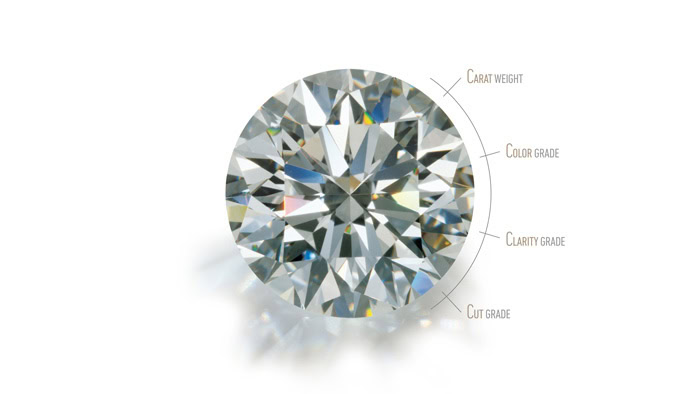
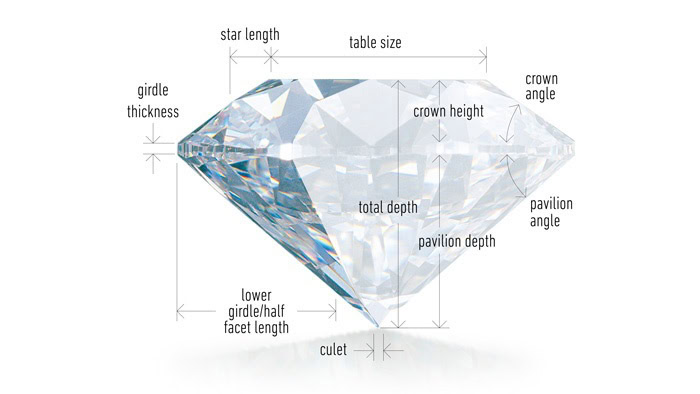
How proportions, symmetry and polish decide a diamond’s brilliance.
Diamond color
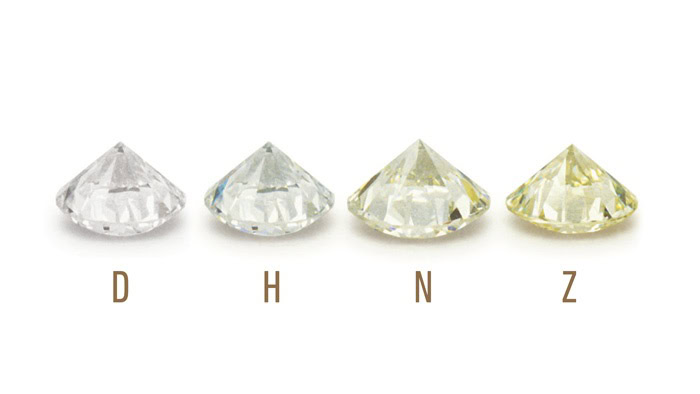
The GIA D-to-Z scale, and where the savings on color actually are.
Reading the number
Diamond points: how carat weight is written and read
One carat is divided into one hundred diamond points, so 0.75 ct is seventy-five points and 0.25 ct is twenty-five. The shorthand is how the trade talks: a seventy-five pointer, a fifty pointer. Anything under a carat is commonly described in diamond points rather than decimals, and you will hear both used interchangeably in the same sentence.
Precision matters more than it sounds. Weights are recorded to the hundredth of a carat and rounding is not permitted upward, so a stone weighing 0.998 ct is reported as 0.99 and cannot be sold as a full carat. That single hundredth of a carat sits either side of a price boundary, which is why diamond points are worth understanding before you compare two quotes.
On the hand
What diamond carat size actually looks like on the hand
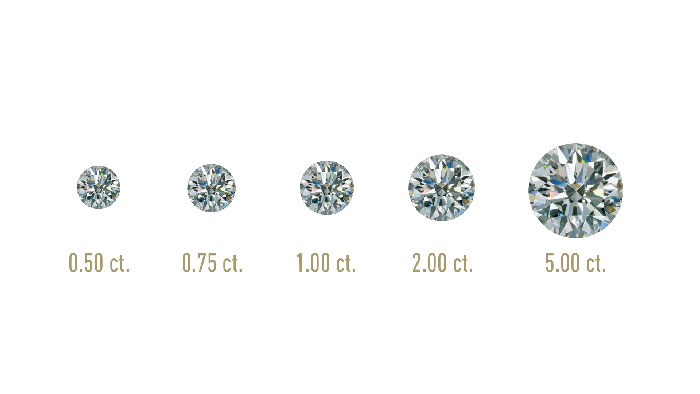
A one carat round brilliant measures roughly 6.5 mm across, a 1.50 ct about 7.4 mm, and a 2.00 ct about 8.1 mm. The numbers climb far more slowly than the weight does, because weight grows with volume while what you see is the diameter. Doubling diamond carat weight adds only about a quarter to the width of the stone.
That is why diamond carat size disappoints people who shop by weight alone. Going from 1.00 to 1.50 ct is fifty percent more stone and a substantial price jump, but under a millimeter of extra width on the finger. Hand size changes the impression as much as the stone does: the same diamond carat size reads noticeably larger on a slender finger than on a wide one.
Spread
Millimeter spread versus diamond carat weight
Spread is the face-up measurement, and it is the thing people actually see. Two stones of identical diamond carat weight can differ by half a millimeter or more in spread depending on how they were cut. A deep stone hides weight in the pavilion where nobody looks at it; a well proportioned one puts that same weight into visible width.
Read the measurements line on the report rather than the weight. A 1.00 ct round cut to 6.2 mm is carrying dead weight below the girdle and will face up smaller than a 0.95 ct cut to 6.4 mm, while costing more. Check depth percentage too — much above 63% on a round brilliant usually means spread is being sacrificed for the number on the tag.
Pricing thresholds
How diamond magic sizes affect what you pay
Prices step rather than slope. At 0.50, 0.75, 1.00, 1.50 and 2.00 carats the per-carat price jumps because demand clusters at round numbers, and those thresholds are the diamond magic sizes. The steepest of them is the full carat: a 1.00 ct can cost twenty percent more than a 0.95 ct that no eye on earth could separate from it on a hand.
Buying just below a threshold is the single easiest saving available. A 0.92, a 1.42 or a 1.90 sits below the boundary, faces up within a rounding error of the magic size above it, and costs meaningfully less. Ask specifically for stones under the line — most sellers stock them precisely because they are harder to move at list price.
Choosing
Choosing a diamond carat size for the setting and finger
Start with the hand and the setting, not the target number. A halo makes a center stone read roughly half a carat larger, and a thin band makes whatever sits on it look bigger by contrast. Elongated shapes — oval, marquise, pear, emerald — cover more finger for the same diamond carat weight than a round brilliant does, often by a visible margin.
Then think about how the ring is worn. Anything above about two carats sits high enough to catch on gloves, hair and car doors unless it is set low or bezeled, and a stone that spends its life turned round on the finger is doing nobody any good. Our diamond cut guide covers the proportions that decide spread, and the GIA carat overview explains how weights are recorded.
Try it on
Diamond carat weight is a number until you wear it
Tell us your budget and we will set 0.90 against 1.00, round against oval, on your hand and in your metal, so you can see exactly where the money shows and where it does not.
Carat weight questions we hear most
Is a bigger carat weight always a bigger looking diamond?
No. Two stones of equal weight can face up very differently. A deep, narrow diamond hides its mass below the girdle, while a well-proportioned one spreads it across a wider table. Compare millimeter measurements, not just carat weight.
What is a pointer?
Jewelers describe stones under one carat by points alone. A 0.25 carat diamond is a twenty-five pointer. Above a carat, weight is spoken in carats and decimals, so 1.08 carats is one point oh eight carats.
Why is a full carat so much more than 0.99?
Because price is quoted per carat and jumps at each magic size. The visual difference between 0.99 and 1.00 is essentially nil, but the price difference is not, which is why buying just below a threshold is the easiest saving in the 4Cs.
Which shapes look largest for the weight?
Elongated outlines: oval, marquise and pear spread weight across a longer surface, so they read larger than a round of the same weight. Rounds command the highest price per carat.
Should I trade carat weight for cut?
Rarely the other way around. Cut controls brilliance, so a slightly smaller excellent cut usually outshines a larger stone with weaker proportions.
How many diamond points are in a carat?
One hundred. A carat divides into one hundred diamond points, so 0.50 ct is fifty points and 0.25 ct is twenty-five. Stones below a full carat are usually described in points in the trade — a seventy-five pointer means 0.75 ct — and the two forms are used interchangeably.
What diamond carat size should I buy?
The one that suits the hand and the setting rather than a round number. Elongated shapes cover more finger for the same weight, a halo adds roughly half a carat of apparent size, and a slender finger flatters a smaller stone. Decide the look first and let the diamond carat weight follow from it.
What are the diamond magic sizes?
0.50, 0.75, 1.00, 1.50 and 2.00 carats, with 1.00 the steepest. Prices step up sharply at each of the diamond magic sizes because demand clusters on round numbers, so a stone just below a threshold costs noticeably less while looking identical on a hand.
Is a 0.95 carat noticeably smaller than a 1.00 carat?
No. The difference in diameter is roughly a tenth of a millimeter — well below what anyone can see, including a jeweler without calipers. The difference in price is often fifteen to twenty percent, which makes buying under a magic size the easiest saving in the whole process.
Does a bigger diamond carat weight always look bigger?
No, and this surprises people. Weight can be hidden in the pavilion where it adds nothing visible, so a deep 1.00 ct can face up smaller than a well cut 0.95 ct. Compare the millimeter measurements on the report, not just the carat figure.
How do I convert diamond carat weight to millimeters?
Approximately, and only for a given shape. A round brilliant runs about 5.0 mm at half a carat, 6.5 mm at one carat, 7.4 mm at 1.50 and 8.1 mm at two. Fancy shapes differ substantially, so use the measurements printed on the report rather than a general chart.
Is carat weight the same as size?
No. Carat weight is mass — 200 milligrams per carat — while size is what you see face up. The two only track each other when stones are cut to similar proportions, which is exactly why two one carat diamonds can look visibly different on the same hand.
Which shapes look largest for the diamond carat weight?
Marquise, pear and oval, in roughly that order, then emerald. Elongated outlines spread the same weight over more finger and read larger. Round brilliants and cushions look smallest for their weight, and princess cuts sit in between, though a princess covers more area than its width suggests.
Should I sacrifice cut for a larger diamond carat size?
Almost never. Cut governs how much light comes back out of the stone, and a poorly cut larger diamond looks dull and often faces up no bigger than a smaller well cut one. Hold the cut grade at Excellent or Very Good and let the carat weight land where the budget allows.
How is diamond carat weight measured and recorded?
On a calibrated electronic balance accurate to a ten thousandth of a carat, then reported to the hundredth. Laboratories never round upward, so a stone at 0.996 ct is recorded as 0.99. Any report quoting a weight to fewer than two decimal places is worth questioning.
Does the setting change how large a stone looks?
Considerably. A halo of small stones can make a center look half a size larger, a thin band exaggerates whatever sits on it by contrast, and a bezel tends to shrink the apparent outline because the metal rim reads as part of the stone. Prong style matters less than people expect, though a low setting always looks smaller than a high one.
Is total weight the same as center stone weight?
No, and the distinction is worth checking on any quote. Total weight adds every stone in the piece together, including accent stones and a halo, so a ring advertised at two carats total might hold a one carat center surrounded by a carat of small stones. Always ask what the center stone alone weighs.
How accurate are the size charts I find online?
Reasonable as a starting point and unreliable as a rule. They assume ideal proportions, and real stones vary by several tenths of a millimeter either side of the chart figure. The measurements printed on your own grading report are the only ones that describe the stone in front of you.
Do lab grown stones follow the same pricing steps?
The steps exist but they are much shallower. Because supply is not constrained in the same way, the premium attached to round thresholds is far smaller than it is for natural stones, and it has been shifting year to year. The saving from buying just under a threshold is correspondingly smaller.
Can two stones of the same weight be priced very differently?
Routinely, and cut is usually why. Two stones of identical mass can differ in spread, in light return and in how they face up, and that is before color and clarity are considered. Weight is one line on a report; it is never the line that decides what a diamond is worth.
Why do some reports list a weight range instead of a figure?
Because the stone has not been removed from its mounting. A laboratory can only weigh a loose diamond, so a stone already set in a ring is estimated from its measurements and the grade is issued with qualifying language. If an exact figure matters — for insurance, for a sale, for an estate — the stone has to come out of the setting first, which is routine bench work and takes very little time.
Visit us
21073 Powerline Rd, #37
Boca Raton, FL 33433
Mon to Fri 9:30 to 5:30
Saturday 10:30 to 4:30
Sunday Closed
Walk in any time to compare carat weights and millimeter spreads on your own hand with a gemologist, or book ahead for an appraisal or a custom design consult.