
Diamond education
Learn the GIA 4Cs before you choose your diamond
Cut, color, clarity and carat weight — explained by a G.I.A. gemologist in Boca Raton.
Understanding the 4Cs of diamond quality
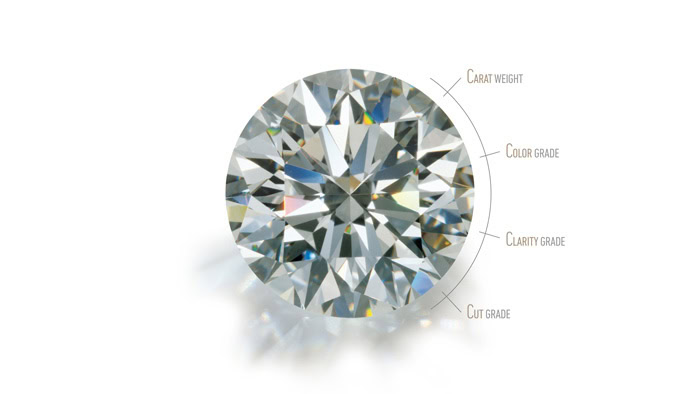
At David Stern Jewelers we believe in sending you home with knowledge, not just a receipt, and that is what this diamond education hub is for. The 4Cs — cut, color, clarity and carat weight — were developed by the Gemological Institute of America and are the benchmark for assessing diamond quality worldwide. Each one describes a distinct characteristic that shapes how a diamond looks and what it is worth.
Our staff includes graduate gemologists, and GIA diamond grading sits behind everything on this page: every certified stone we sell arrives with a GIA grading report: the 4Cs, a diagram plotting internal inclusions and external blemishes, and the polish and symmetry details most shoppers never get to see. GIA does not issue reports for synthetics, simulants or stones with unstable treatments, so a report is also your assurance the diamond is what it claims to be.
Cut
How cut controls the sparkle
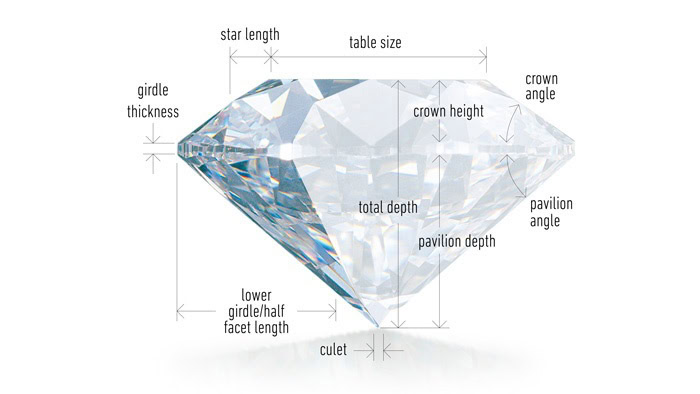
Cut is not shape. It describes how well a diamond’s facets interact with light — proportions, symmetry and polish working together. A well-cut stone shows brightness (white light reflected inside and out), fire (white light scattered into spectral colors) and scintillation (the sparkle and pattern of light and dark as it moves).
The GIA weighs seven factors and assigns one of five grades. Excellent stones have ideal proportions and maximum light performance. Very Good sits just outside the ideal range and offers strong value. Good still reads beautifully with less brilliance. Fair and Poor show noticeable limitations, often looking dull in ordinary light. Many stones also carry a microscopic laser inscription on the girdle for identification.
Color
Where color grading starts and stops
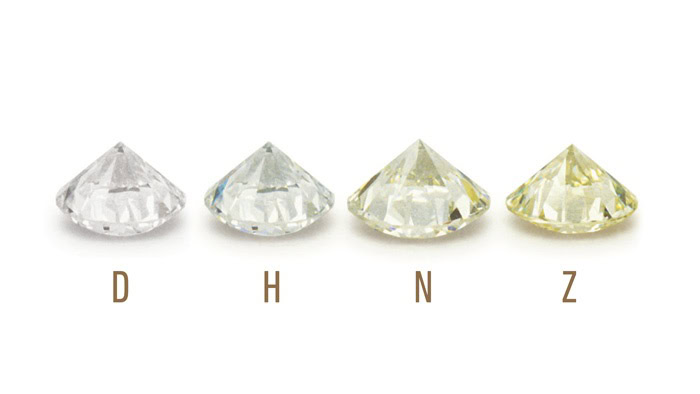
In diamond grading, color refers to the absence of color. A chemically pure, structurally perfect diamond has no hue and is more valuable. The GIA scale runs from D, absolutely colorless, to Z, light yellow or brown. GIA issues color grades for loose, natural diamonds of 0.15 carats or more.
D–F stones are colorless and the most rare. G–J are near colorless and usually the best value, with any tint subtle at best. K–M can show faint warmth to the naked eye, and N–Z read light to noticeably colored. Preference matters here: some clients want icy white, others love a warmer stone, and both are legitimate choices.
Clarity & carat
Clarity, carat weight and why two stones differ
Clarity describes the absence of inclusions and blemishes. A grade reflects the number, size, relief, nature and position of those characteristics, and how much they affect the stone’s appearance overall.
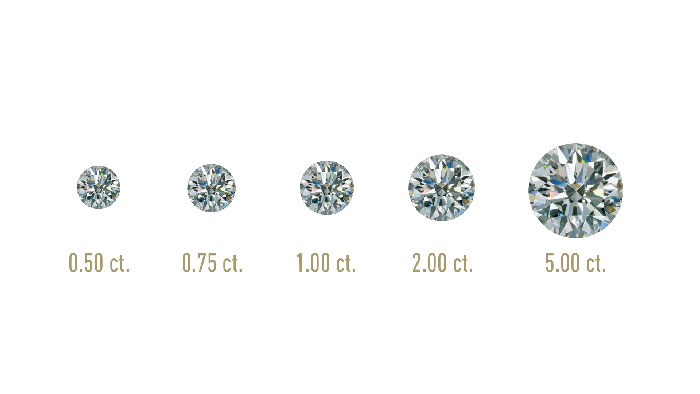
Carat weight measures weight, not size: one carat equals 200 milligrams. Two diamonds of identical carat weight can look and price very differently depending on cut, color and clarity, and a shallow stone may cover more surface area while losing brilliance. A smaller diamond with an Excellent cut often outshines a larger one that was cut for weight.
Ten tips for buying diamond jewelry
01
Understand the 4Cs
Carat weight, color, clarity and cut are the foundation of diamond quality and value. The GIA grading report spells out your stone’s proportions and clarity characteristics in plain terms.
02
Insist on GIA certification
A GIA report is an independent evaluation from the world’s leading authority in diamond grading, and many insurers require one before scheduling coverage.
03
Choose the right setting
The setting can dramatically change how a diamond reads on the hand. We help you select or build a mounting that shows your stone at its best.
04
Request an appraisal
A written appraisal documents carat weight, color, clarity, cut and fair market value — for insurance, estate planning, divorce settlements or loan security.
05
Research your jeweler
We have built a reputation for integrity and craftsmanship over 40 years as a family-owned store serving South Florida.
06
Compare for a fair price
Compare offers. We price competitively and stand behind a highest-cash-price guarantee when you sell.
07
Ask about provenance
With estate and vintage pieces, history matters. We share what we know about where a piece came from and how it was made.
08
Check for treatments
Some stones are treated to improve appearance. Ask whether a diamond is natural and untreated — we disclose every stone’s history.
09
Explore your options
Natural diamonds, colored stones and loose stones all behave differently. We walk you through the full selection.
10
Work with trusted experts
Our team includes graduate gemologists and certified appraisers who guide you from first question to finished piece.
Where to start
How to buy a diamond: a short diamond education guide
Work in this order and the decision gets easier. Set a budget, choose a shape, then decide which of the 4Cs you care about most, because no stone is best at all four at once. Most people get the most visible return by spending on cut, holding color at G to J and clarity at VS2 to SI1, and letting carat weight land wherever the budget allows. That single trade-off is the heart of any honest diamond education guide.
Then look at stones. Two diamonds with matching reports can look different in the hand, so the last step in learning how to buy a diamond is always comparison under the same light. Bring the reports, bring your questions, and ask the gemologist to show you what each grade actually looks like. Our 4Cs guide, cut guide, color guide and carat weight guide go deeper on each one.
The report
GIA diamond grading and what the report actually says
A grading report is a description, not a valuation. GIA diamond grading records shape and cutting style, measurements, carat weight, color grade, clarity grade, cut grade for round brilliants, polish, symmetry and fluorescence, and it plots the inclusions on a diagram. It does not state a price, and it does not say whether the stone is a good buy.
Read it from the plot outward. The clarity diagram tells you where the inclusions sit, which matters far more than the grade letter: an SI1 with inclusions hidden under a prong can face up cleaner than a VS2 with one under the table. Check that the report number is laser-inscribed on the girdle, and verify it yourself on the GIA report check before you buy anywhere.
On the day
What to look for when buying a diamond in person
Paperwork narrows the field; your eyes decide. What to look for when buying a diamond in person is light return first — tilt the stone under a spot light and watch how it flashes, then move to diffuse light and see whether it goes flat. A well cut diamond keeps working in both. Next, look straight down through the table for any inclusion you can see unaided at arm’s length.
Then check the setting and the seller. Prongs should sit flush and the girdle should not be chipped. Ask whether the stone is natural and untreated, ask to see it beside one grade up and one grade down, and ask what it would be worth if you sold it back. A jeweler who answers all three is doing the same thing this diamond education page is doing.
See it in person
Compare graded diamonds side by side in Boca Raton
Reports tell you a lot, but nothing replaces holding two stones under the same light. Bring your questions — we will show you exactly what separates one grade from the next, and what it means for your budget. We are at 21073 Powerline Rd, #37, Boca Raton, Monday through Friday 9:30am to 5:30pm and Saturday 10:30am to 4:30pm.
Shape and setting
Shape, setting and how to buy a diamond that suits the hand
Shape is preference; the rest is physics. Round brilliants return the most light because the cut has been optimized for it, and they are graded for cut accordingly. Fancy shapes — oval, cushion, emerald, pear, radiant — carry no GIA cut grade at all, so you judge them on measurements and on how they look. Elongated shapes read larger for the same carat weight, which is the cheapest way to gain visible size.
The setting then decides how much of that work reaches the eye. A solitaire with a high basket lets light in from underneath; a halo makes a center stone read half a size larger; a bezel protects a soft girdle. Step cuts such as emerald show inclusions more readily, so clarity matters more there and color matters less. Knowing how to buy a diamond means matching those three choices deliberately rather than one at a time.
Diamond education questions we hear most
What are the GIA’s 4Cs, and why do they matter?
Carat, cut, clarity and color are the four characteristics diamonds are graded on. They give you an objective standard to compare stones, so your decision rests on documented quality rather than a sales pitch.
How do you use GIA grading in the showroom?
We feature GIA-certified stones and walk you through the report line by line. GIA grades diamonds unset for a full report, and certification confirms whether a stone is natural or lab-grown and discloses any treatment.
What do you look at beyond the 4Cs?
Character: how a stone scintillates, how its fire reads in daylight, the reputation of the cutter, and how well the diamond sits in its mounting.
Can you explain the nuances inside a single grade?
Yes. Within cut we show how polish and symmetry change light performance; within clarity, which inclusions are actually visible; within color, how one grade steps to the next on the hand.
What assurance do I get with a GIA-certified diamond?
An independent, globally recognized evaluation of the 4Cs — documentation that supports insurance coverage and typically holds stronger resale value than an uncertified stone.
Where should I start with diamond education?
With cut, because it does the most visible work. Once you understand how proportions drive light return, the other three Cs become trade-offs you can make on purpose rather than guesses. Everything else in this diamond education hub builds on that one idea.
How to buy a diamond on a fixed budget?
Decide the one thing you will not compromise on and let the rest move. Learning how to buy a diamond on a budget usually means holding an excellent cut grade, dropping color to G or H where no tint is visible face up, accepting an eye-clean SI1, and buying just under a magic carat weight such as 0.90 rather than 1.00.
Is GIA diamond grading better than other laboratories?
It is the most consistent, which is what matters. GIA diamond grading is applied by multiple graders who do not know each other’s conclusions, and its scales are the ones the trade prices against. Reports from softer labs frequently grade one to three steps more generously, so the same letter does not mean the same stone.
What should I look for when buying a diamond online?
A current report from GIA, full measurements, and a real photograph or video of that exact stone rather than a stock image. Knowing what to look for when buying a diamond online also means checking the return window, because no image settles how a stone behaves in ordinary room light.
Does a bigger carat weight always look bigger?
No. Carat is weight, not spread. A deeply cut stone hides part of its weight in the pavilion and faces up smaller than a well proportioned diamond of the same carat, which is why two one-carat stones can differ noticeably across the table. Our carat weight guide covers the measurements to compare.
What does diamond fluorescence do to a stone?
Usually nothing you can see. Faint to medium blue fluorescence has no visible effect on most diamonds and can slightly improve the look of a J or K color in daylight. Strong fluorescence occasionally causes a hazy appearance, so it is one thing worth checking in person rather than on paper.
Are lab-grown diamonds graded the same way?
They are graded on the same 4Cs, and a laboratory report will say plainly that the stone is laboratory grown. The difference is in the market rather than the material: lab-grown prices have fallen steadily, so resale and trade-up behave very differently from natural stones.
Should I buy the certificate or the diamond?
The diamond, with the certificate as evidence. A report describes a stone accurately but cannot tell you whether the inclusions are hidden, whether the cut is lively or whether the color reads warm on your hand. The whole point of diamond education is being able to look past the letters.
What is a magic size, and should I avoid one?
Magic sizes are the round numbers the market prices against, chiefly 0.50, 0.75, 1.00, 1.50 and 2.00 carats. Prices step up sharply at each one, so a 0.95 carat stone typically costs noticeably less than a 1.00 and is indistinguishable on the hand.
Can you walk me through all of this in the showroom?
Yes, and there is no charge or obligation. Bring a report, a stone or just a question, and a graduate gemologist will show you the differences under the microscope and in normal light. Most of what people want from diamond education lands in about twenty minutes at the counter.
Does shape change the price of a diamond?
Considerably. Round brilliants cost the most per carat because demand is highest and more rough is lost in cutting. Ovals, cushions and emerald cuts typically run fifteen to thirty percent less for comparable grades, which is the single largest saving available once you know how to buy a diamond by measurements rather than by name.
Which of the 4Cs should I spend the most on?
Cut, every time. It is the only one of the four that is a measure of workmanship rather than nature, and it governs how much light the stone gives back. Most diamond education comes down to protecting the cut grade and trading the other three against your budget.
Do I need a GIA report for a small stone?
Below about a third of a carat it is rarely worth the cost, and most melee is sold ungraded. Above half a carat, GIA diamond grading is worth having: it is what insurers accept, what a future buyer will ask for, and what protects you against an over-generous in-house grade.
Can you check a diamond I already own?
Yes. Bring it in and a graduate gemologist will examine it under the microscope, confirm the grades against any report you have and explain what you are looking at. There is no charge for that conversation, and it is the most direct diamond education there is.
Visit us
21073 Powerline Rd, #37
Boca Raton, FL 33433
Mon to Fri 9:30 to 5:30
Saturday 10:30 to 4:30
Sunday Closed
Walk in any time to look at graded diamonds with a gemologist, or book ahead for an appraisal or a custom design consult.