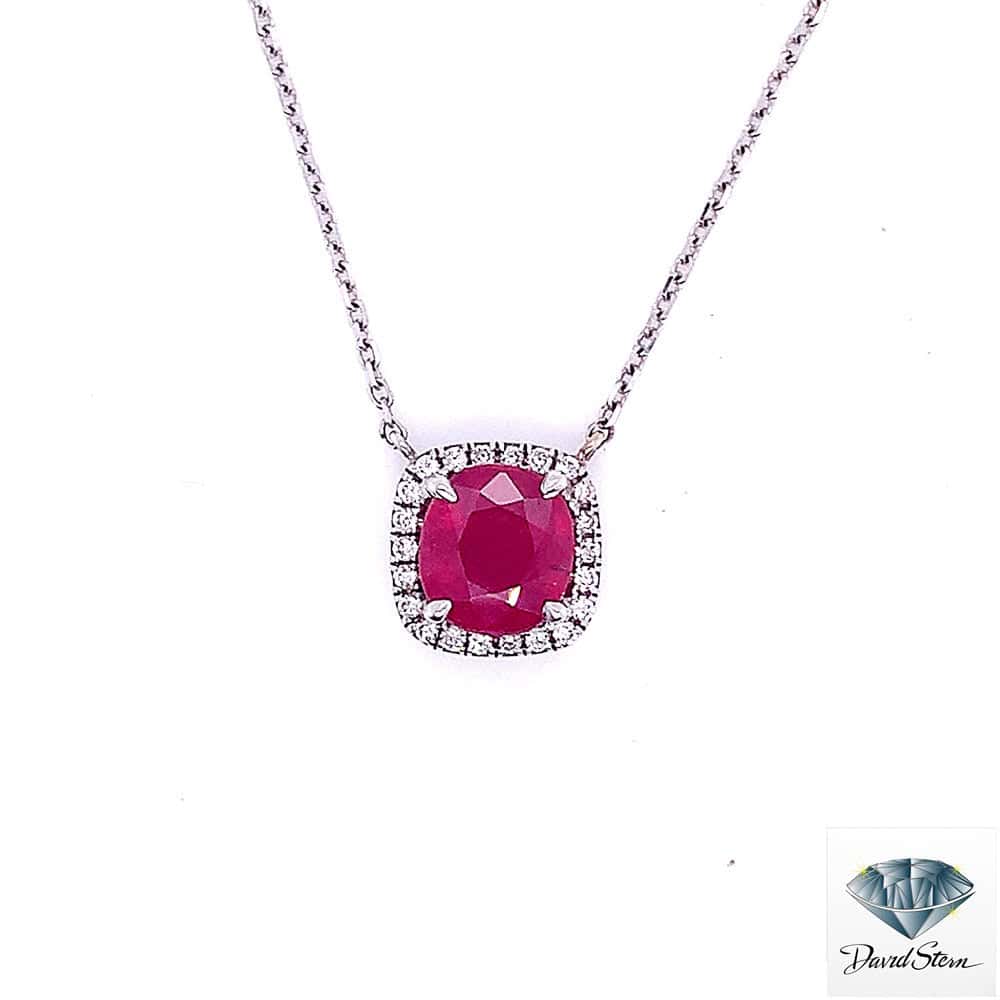
2.50 CT Cushion Faceted Ruby Couture Necklace in 14kt White Gold
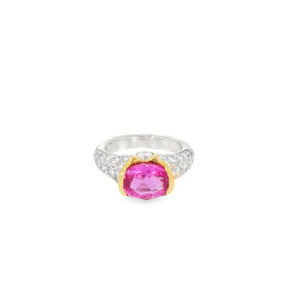
A one-of-a-kind ruby necklace in 14kt white gold, centered on a 2.50 carat cushion cut ruby in a vivid red. Twenty-two round diamonds, about a quarter carat in total, form a cushion-shaped halo around the ruby, and the chain attaches to either side of the halo so the pendant stays fixed and centered. It comes with a written appraisal for insurance and can be seen in person at our Boca Raton showroom.
PRODUCT DETAILS
- Designed By:
- David Stern Jewelers
- Sub Category:
- Necklaces
- Sku Number:
- dsj_fcj_07700093
STONE DETAILS
- Center Stone:
- Cushion Ruby
- Secondary Stone:
- 0.25 ct tw Round Diamond
- Color And Clarity:
- I
- Total Carat Weight:
- 2.75 ct tw
METAL DETAILS
- Metal Type:
- 14kt White Gold
- Gold Content:
- 58.3% pure
CERTIFICATION
- Appraised By:
- David Stern, G.I.A. Gemologist
- Appraisal Included:
- Yes, complimentary

Free Jewelry Appraisal with $2500 Purchase
David Stern Jewelers guarantees every piece of jewelry we sell, which is why we include a free jewelry appraisal with every item purchased.
DESCRIPTION
This ruby necklace is a one-of-a-kind piece in 14kt white gold, built around a 2.50 carat cushion cut ruby in a vivid, saturated red. A halo of twenty-two small round diamonds frames the stone, and the chain attaches directly to either side of the halo so the ruby sits fixed and centered at the neckline. What follows describes the exact piece you will see in our Boca Raton showroom.
The 2.50 carat cushion ruby
The center stone is a cushion cut ruby of 2.50 carats. A ruby of that size is a genuine centerpiece: large enough to show its color clearly from across a room, yet compact enough to wear every day.
Color is what matters most in a ruby, and this one has it. The Gemological Institute of America describes the finest rubies as a pure, vibrant red to slightly purplish red, strong enough to glow without turning dark. The ruby in this necklace shows a rich raspberry red that stays bright in ordinary room light.
Ruby is the red variety of corundum, the same mineral as sapphire, and it sits at 9 on the Mohs hardness scale, second only to diamond. That makes a ruby necklace one of the most practical ways to wear a colored gem: it resists scratches and everyday wear far better than softer stones.
Rubies of good color above two carats are much less common than smaller stones, and the price per carat rises steeply with size. A well-colored 2.50 carat ruby is a stone worth taking time over in person.
Why a cushion cut ruby necklace
The cushion is a square-to-rectangular shape with softly rounded corners and larger facets, sometimes called a pillow cut. It is one of the oldest shapes in gem cutting, and it remains one of the most flattering for rubies.
The International Gem Society notes that cushion cuts balance brilliance with depth of color, which suits colored stones in particular. On a cushion ruby necklace, the broad facets give big flashes of red rather than tiny pinpoints, and the rounded corners protect the stone's outline.
The cushion shape also pairs naturally with a halo. A cushion-shaped frame of diamonds follows the ruby's outline exactly, so the finished pendant reads as one clean, soft-cornered square of color and light.
The ruby is held in four claw prongs at the corners. That keeps as much of the stone visible as possible while holding it securely.
A ruby and diamond necklace with a classic halo
What makes this a ruby and diamond necklace rather than a simple solitaire is the halo. Twenty-two round diamonds of about 0.015 carats each surround the ruby, roughly a quarter carat in total, recorded as I color.
The halo does two jobs. It frames the ruby with a continuous line of white sparkle, and it makes the center stone look larger than it is. White diamonds against red also make the red look deeper and the diamonds look brighter.
In a halo of small stones, I color faces up bright and white, especially set in white gold. What you see when the piece is worn is an even ring of sparkle around a strong red center.
A ruby halo pendant that stays centered
This ruby halo pendant is built with the chain attached directly to each side of the halo, rather than hanging from a bail. That design keeps the pendant from flipping or turning, so the ruby always faces forward.
It also lets the pendant sit close to the neck, which gives the necklace a clean, modern look. The ruby halo pendant becomes part of the chain line rather than something swinging below it.
The mounting is 14kt white gold, a practical choice for everyday jewelry. 14kt is harder than 18kt, which matters for the small halo settings and the prongs, and white gold keeps the diamonds bright. Like most white gold it is finished with rhodium plating, which can be refreshed at the bench whenever it wears.
How this ruby necklace wears
A ruby necklace in this size is one of the most versatile colored stone pieces you can own. It is bold enough to wear to an evening event and neat enough to wear daily with a white shirt or a simple knit.
Red pairs beautifully with black, white, navy, gray and cream, and it flatters every skin tone. Because the pendant sits close to the neck, it works with almost any neckline, from a crew neck to an open collar.
We will fit it on you in the showroom so you can see exactly where the ruby sits. If you are unsure about chain length, ask us to measure it with you; a small change moves the pendant from the base of the throat to just above a neckline.
A July birthstone necklace
Ruby is the birthstone for July, and GIA's guide to the July birthstone covers its long history as a stone of passion, protection and prosperity. For a July birthday, a ruby halo necklace is a July birthstone necklace with real presence rather than a small stone on a chain.
Ruby is also the traditional gift for the fortieth wedding anniversary, and it is a natural choice for Valentine's Day. A 2.50 carat ruby in a diamond halo is a meaningful way to mark any of them.
Because a red stone never goes out of style, a July birthstone necklace like this is worn for decades and then passed down.
How to judge a ruby necklace in person
Start with color. Look for a vivid, even red across the stone, without brownish or overly dark areas. Tilt the stone slowly: the best rubies stay red across the face rather than showing dark patches or windows of lighter color.
Next, look at the stone in more than one light. A fine ruby looks rich in daylight and even more vivid under warm indoor light. We are happy to take the piece to the window so you can compare.
Then look at clarity. Rubies nearly always contain some natural inclusions, and a few are expected. What matters is that they do not reduce the stone's brightness or sit prominently in the center of the face.
Finally, look at the workmanship. The prongs should hold the ruby evenly at each corner, the halo diamonds should sit level and evenly spaced, and the back should be finished as carefully as the front. That is where a well-made ruby and diamond necklace separates itself from a mass-produced one.
Ruby compared with other red gemstones
Ruby is not the only red gem, and it helps to know where it sits. Red spinel can be very beautiful but is slightly softer, at 8 on the Mohs scale. Garnet is far more common and usually darker. Red tourmaline, sometimes called rubellite, is softer again, at around 7 to 7.5.
Ruby gives you the most classic red with the durability to wear it every day. The International Gem Society gives a good overview of how ruby compares with other red stones.
Where fine rubies come from
Rubies are mined in a handful of places around the world. Myanmar, historically known as Burma, has long been famous for rubies of intense red, and Thailand and Cambodia were once major sources of darker stones. Today much of the world's supply comes from East Africa, particularly Mozambique, along with Madagascar, Tanzania and Sri Lanka.
For a ruby necklace, each source tends to produce stones with a slightly different character, from purplish red to a warmer, more orange-leaning red. Origin can affect value, but for most buyers the stone in front of them matters far more than the map. Color, brightness and cut decide how a ruby looks on the neck.
Ruby and sapphire are the same mineral, corundum. The only difference is color: trace amounts of chromium turn corundum red, and red corundum is called ruby. The same chromium is what gives the best rubies their glow, a faint fluorescence that makes them look lit from within in daylight.
Ruby through history
Ruby has been prized for thousands of years. In ancient Sanskrit it was called ratnaraj, the king of precious stones, and it was worn by rulers across Asia and Europe as a symbol of power and protection.
In European jewelry, rubies were set into crowns, orders of chivalry and royal regalia, and for centuries many red stones in famous collections were assumed to be rubies. Some of the best known, such as the Black Prince's Ruby in the British crown, later turned out to be red spinel, a reminder of how highly the color itself was valued.
That long history is part of what makes a ruby necklace such a meaningful gift. It has been the stone of love, courage and loyalty for as long as people have worn jewelry.
What sets this cushion ruby necklace apart
Many ruby pendants use small stones, often well under a carat. This cushion ruby necklace centers on a 2.50 carat stone, which gives it the color and presence that only a larger ruby can provide.
The design is also carefully resolved. The cushion ruby, the cushion halo and the side-attached chain all follow the same soft-cornered geometry, so nothing looks added on. It is a piece that looks simple at a glance and reveals its detail up close.
And because it is a single piece, you will not see it on anyone else. This is the only one in our case.
Choosing a ruby necklace as a gift
A ruby necklace is one of the easier fine jewelry gifts to get right. It does not depend on a ring size, red flatters almost everyone, and a halo pendant suits both everyday and occasion wear. The only real questions are whether the person wears white metal and what length of chain they prefer.
If it is a July birthday, a fortieth anniversary or Valentine's Day, the stone carries its own meaning as well. If not, a ruby needs no occasion to justify it.
We are glad to help you decide. Bring a photo of what they usually wear, and we will tell you honestly whether this piece suits them or whether something else from the case would be the better choice.
Caring for a ruby halo pendant
Clean your ruby halo pendant with warm water, a drop of mild soap and a soft brush, working gently around the halo where dust and lotion collect. Rinse and dry with a lint-free cloth. Our jewelry care guide goes through the process step by step.
Store the ruby necklace on its own in a lined box or pouch. Diamonds can scratch other jewelry, and keeping this piece apart protects everything else you own.
Put it on last and take it off first. Perfume, hairspray and lotion leave a film that dulls both the ruby and the diamonds.
Bring it in once a year and we will clean it professionally and check the prongs, halo and clasp at no charge.

Appraisal, documentation and what you receive
Every ruby necklace at this level leaves with a written appraisal describing the metal, the stones, the measurements and a stated replacement value for insurance. That document is what your insurer will ask for, and it is worth updating every few years as gold and gem prices move. Our jewelry appraisals page explains how we do it.
You can see our full range of necklaces alongside this one, and our diamond and gemstone education pages set out how grading actually works. If you would like a piece altered, or something built around a stone you already own, we do that too through our design service.
See this ruby necklace in Boca Raton
Photographs of rubies are unreliable. Screens push red toward pink or orange, and a ruby changes character between daylight and warm light. A piece like this is worth seeing in person, which is why we would rather you came in and tried it on than bought it sight unseen.
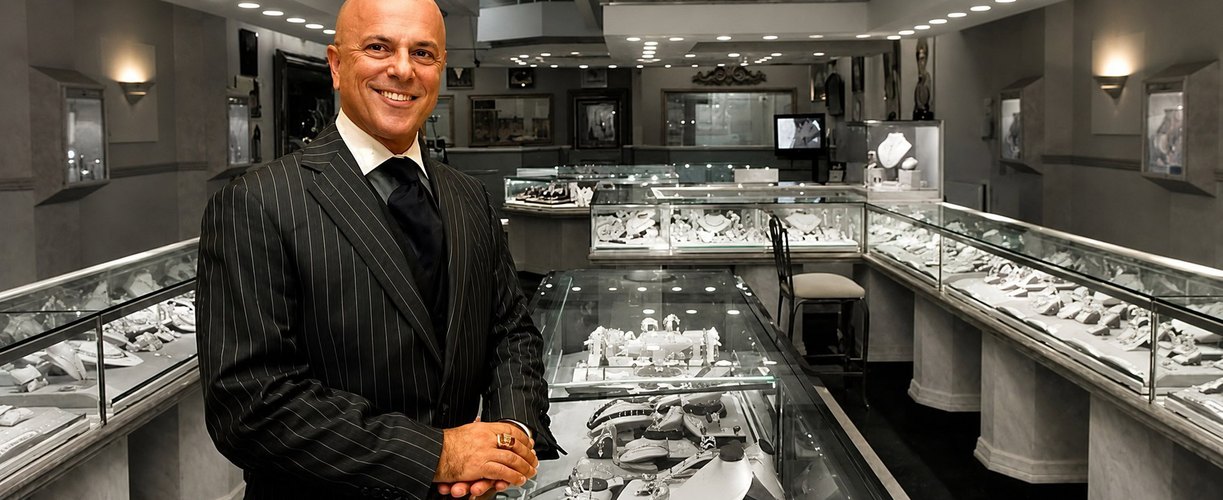
David Stern Jewelers has been in business for over 40 years, family owned since 1970, and the showroom is at 21073 Powerline Rd #37, Boca Raton. We are open Monday to Friday from 9:30am to 5:30pm and Saturday from 10:30am to 4:30pm. Call 561-994-3330 and we will have the piece waiting, or book an appointment for a quieter time.
If this particular piece is not quite right, tell us why. A larger ruby, yellow gold instead of white, a different shape: with a piece like this the specification is a starting point, and we would rather find you the right thing than sell you the nearest thing.
Common questions about this ruby necklace
How large is the ruby?
The center stone is a cushion cut ruby of 2.50 carats. With the twenty-two diamonds in the halo, about a quarter carat in total, the total gem weight is approximately 2.75 carats.
What is a cushion cut?
A cushion cut is a square-to-rectangular shape with softly rounded corners and larger facets, sometimes called a pillow cut. It gives rubies broad flashes of color and a soft, classic outline.
How many diamonds are in the halo?
There are twenty-two round diamonds of about 0.015 carats each, roughly a quarter carat in total, recorded as I color. They frame the ruby with a continuous line of white sparkle.
Is ruby durable enough for everyday wear?
Yes. Ruby is 9 on the Mohs hardness scale, second only to diamond, so it resists scratches and everyday wear very well. It is one of the best colored gemstones for jewelry you plan to wear often.
Is the ruby treated?
Most rubies on the market are heated to improve their color and clarity, a stable and widely accepted practice. Ask us in the showroom and we will tell you everything we know about this stone and show it to you under magnification.
Why is the chain attached to the sides of the pendant?
Attaching the chain directly to each side of the halo keeps the pendant fixed and centered, so it never flips or turns and the ruby always faces forward.
Is ruby the July birthstone?
Yes. Ruby is the birthstone for July and the traditional gift for the fortieth wedding anniversary, which makes this a meaningful July birthstone necklace or anniversary gift.
Does the necklace come with an appraisal?
Yes. It leaves with a written appraisal describing the metal, the stones and the measurements, with a replacement value your insurer can use.
Do you buy ruby jewelry as well as sell it?
Yes. We buy fine jewelry, gold and gemstones in Boca Raton, and we can value a piece you already own while you are here.
Can a similar design be made in yellow gold?
Yes. Through our custom design service we can build a comparable halo necklace in yellow or rose gold, or around a different gemstone, including a stone you already own.
One last practical note. Because this is a single piece rather than stock, it can sell on any given day, and we do not hold items without a deposit. If you have seen this ruby necklace here and intend to come in, a phone call first will confirm it is still in the case and save you the trip if it is not.