
Updated September 2026. When we first wrote this post in March 2024, record gold prices meant a little over $2,100 an ounce. Today spot gold trades around $4,250, roughly double. If you have been holding onto old, broken or unwanted gold, that gap is the whole story: the same bag of jewelry is now worth about twice what it was.
Below is the gold price history behind those records, what they mean for the gold you own, how gold is tested before you are paid, how to sell dental gold, and what the law requires when you sell gold in Florida.
Record Gold Prices: How We Got Here
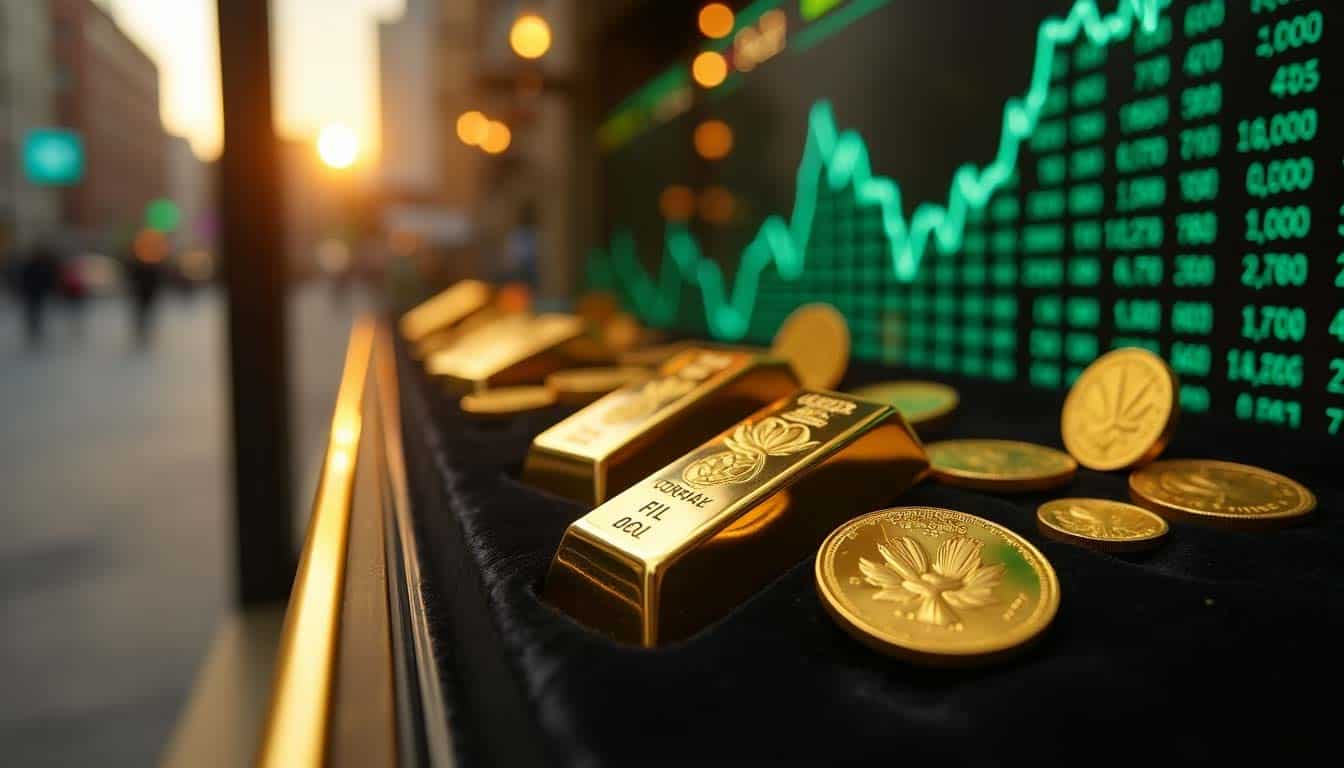
Record gold prices have arrived in quick succession since early 2024. These are the milestones that mattered:
| When | Milestone |
|---|---|
| March 2024 | Gold sets a record above $2,100 an ounce, when this post was first written. |
| August 2024 | Gold closes above $2,500 for the first time. |
| October 2024 | Gold nears $2,800 ahead of the US election. |
| March 2025 | Gold crosses $3,000 an ounce for the first time. |
| April 2025 | Gold touches $3,500 as trade tensions escalate. |
| October 2025 | Gold breaks $4,000, then pulls back sharply after peaking near $4,380. |
| September 2026 | Spot gold trades around $4,250. |
Three forces did most of the work: heavy central bank buying, falling interest rates, and investors looking for protection from trade disputes and government debt. You can follow the full gold price history on the World Gold Council’s price history and check the official daily LBMA benchmark prices.
For the drivers in more depth, see our posts on why gold prices are soaring and how the dollar moves gold.
What Record Gold Prices Mean for Your Jewelry
Record gold prices change the value of every gold item you own, because jewelry is valued on the pure gold inside it. Take a 20-gram 14k chain, a very ordinary piece:
- At $2,150 an ounce (March 2024), its gold content was worth $808.75.
- At $4,250 an ounce (September 2026), the same chain holds $1,598.69 of gold.
That is a 98% increase without the chain changing at all. Here is what a gram of each karat holds at today’s price of about $4,250 an ounce:
| Karat | Stamp | Gold per gram at $4,250/oz |
|---|---|---|
| 24k | 999 | $136.50 |
| 22k | 916 | $125.26 |
| 18k | 750 | $102.48 |
| 14k | 585 | $79.93 |
| 10k | 417 | $56.98 |
Those are melt figures before a buyer’s margin, and they move with the market every day. Our guide on how to sell gold explains how offers are built from them.
Gold Price History: What Past Records Teach
Gold price history is full of records that looked permanent at the time. Gold hit $850 in January 1980 and did not see that level again for 28 years. It reached about $1,900 in 2011, then fell back toward $1,050 by late 2015. It passed $2,000 in August 2020 and then moved sideways for three years.
There is also a difference between a nominal record and a real one. Adjusted for inflation, the 1980 peak was worth far more than $850 in today’s money, so for decades gold’s nominal records were not records in real terms at all. The rally since 2024 has been strong enough that today’s prices stand out even against that history.
None of that predicts what happens next. What gold price history does show is that high prices are not guaranteed to last, which is a good reason to sell gold you no longer want while record gold prices are on offer, rather than wait for a top nobody can see.
Should You Wait for Even Higher Prices?
Every time gold sets a new high, some sellers decide to wait for the next one. Sometimes that works; in 1980 and 2011 it meant waiting many years. The honest answer is that nobody, including us, knows where the next record will be.
A practical middle path is to separate what you own into three piles: pieces you love and will keep, pieces with value beyond their gold, and pieces you will never wear again. Sell the third pile while record gold prices are here. If you want to keep some exposure to the market, sell half now and revisit the rest later.
What we advise against is selling in a hurry to a buyer you have not checked, just because the headline says record gold prices. A strong price only helps you if the buyer pays a fair share of it.
How Gold Is Tested Before You Sell
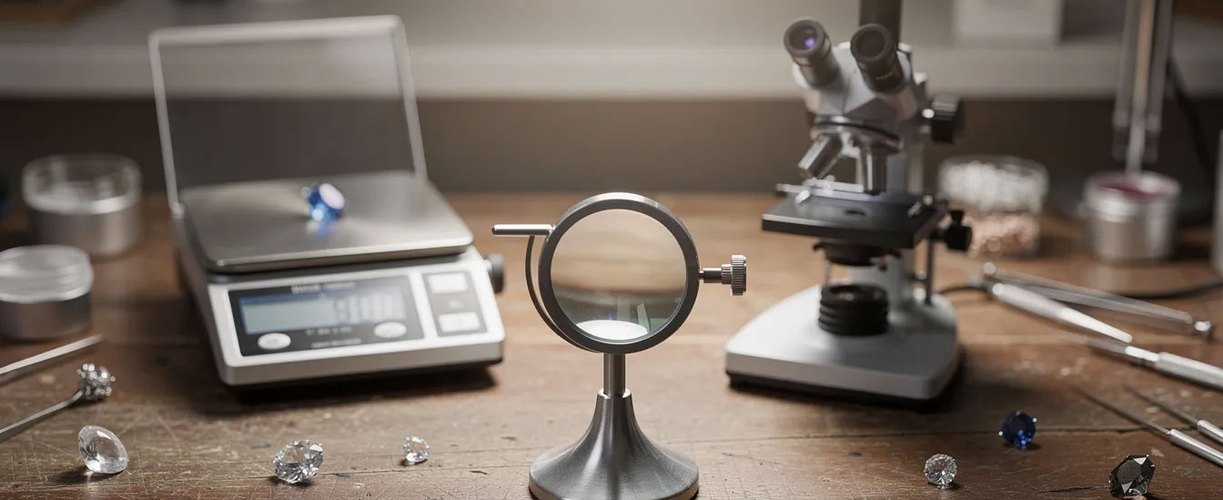
Before any fair offer can be made, a buyer has to know the karat and the weight. Here is how gold is tested at a reputable counter, and what each method tells you:
- Hallmarks. The first check is the stamp: 10K, 14K, 18K or 417, 585, 750. Stamps can be worn, missing or wrong, so they start the test rather than end it.
- Magnet. Gold is not magnetic. A piece that jumps to a magnet is plated or has a steel core.
- Acid test. The piece is rubbed on a touchstone and the streak is treated with acids of known strength. The acid that dissolves the streak shows the karat.
- Electronic testers. These read the metal’s conductivity and give a karat range in seconds, without marking the piece.
- XRF analysis. X-ray fluorescence reads the exact metal content without touching the surface. It is common at refiners and larger buyers.
Knowing how gold is tested helps you spot a careless buyer. Every test should happen in front of you, on each piece or each karat group, not on a single sample from a mixed pile. That is how we test at our counter.
Scrap Gold Hiding Around Your Home
Most people underestimate how much gold they own. Beyond the obvious rings and chains, look for:
- Single earrings and broken chains. The most common scrap gold of all, and weighed just like whole pieces.
- Class rings. Usually 10k and surprisingly heavy.
- Charm bracelets and charms. Often solid gold even when the bracelet is not.
- Cufflinks, tie bars and money clips. Check for a karat stamp on the back.
- Religious medals and pendants. Frequently 14k or 18k.
- Old watch cases. Some vintage cases are solid gold; others are only plated, so they need testing.
Anything marked GF, GP or HGE is gold-filled or plated and holds little gold. Put those aside rather than paying for a trip to sell them. Once you know how gold is tested, it is easy to see why a buyer who checks every piece will usually find more value in a mixed bag than a quick glance suggests.
How to Sell Dental Gold
Old crowns, bridges and inlays are gold too, and many people do not realize they can sell dental gold. Dentists usually return removed work to the patient, and it often ends up in a drawer.
Dental alloys vary more than jewelry. Some are 16k or higher; others contain well under half gold, with palladium, platinum or silver making up the rest. Porcelain crowns have metal underneath, and that metal may or may not be a gold alloy. That is why you should sell dental gold to a buyer who tests it rather than one who quotes a flat price by weight.
Preparation is simple. Sanitize the pieces, but do not try to remove porcelain or cement; the buyer allows for them. Keep dental gold separate from your jewelry so it can be weighed and tested on its own. Expect the offer to reflect the gold content found in testing rather than the full weight of the piece.
A small amount can still add up at today’s prices. If ten grams of dental work turned out to be half gold, it would hold about $683 of gold at $4,250 an ounce, before a buyer’s margin.
Gold Coins and Bullion at Record Prices
Coins and bars ride record gold prices even more directly than jewelry, because their value is almost all gold. Common bullion coins such as American Gold Eagles, Canadian Maple Leafs and South African Krugerrands each contain one troy ounce of pure gold in the one-ounce size, and they usually sell close to spot.
Collectible coins are different. A rare date or a coin in exceptional condition can be worth well above its gold, so do not clean coins and do not sell a collection as scrap without having it looked at first. Keep any original tubes, capsules or assay cards with bars, since they make resale easier.
Pieces Worth More Than Their Gold
Melt value is a floor. Before you sell anything for its gold content alone, set aside:
- Signed and designer jewelry. Recognized makers can command far more than the metal.
- Antique and period pieces. Victorian, Edwardian and Art Deco craftsmanship has its own market.
- Pieces with diamonds or colored stones. Stones are valued separately and can exceed the gold.
If you are unsure, a jewelry appraisal tells you what a piece is worth intact before you decide. We will also flag anything like this during an evaluation rather than simply weighing it.
Sell Gold in Florida: What the Law Requires
When you sell gold in Florida to a jeweler or other secondhand dealer, the transaction is governed by Chapter 538 of the Florida Statutes. The rules exist to keep stolen goods out of the market, and a legitimate buyer will follow them every time:
- Photo ID. You must show a government-issued photo ID, such as a driver license or military ID.
- Thumbprint and details. The dealer records your details and takes a right thumbprint.
- Ownership statement. You sign a statement that you own the items or are entitled to sell them.
- A record of the goods. The dealer describes and photographs the items, including metal type and weight.
- Report and hold. The dealer sends the record to local law enforcement and must hold precious metals and jewelry for 30 days before melting or reselling them.
If a buyer offers to skip the ID or the paperwork, walk away. Anyone ready to sell gold in Florida without a record is also a buyer you have no protection from if something goes wrong. Bring your ID and allow a few extra minutes for the form.
Cash In on Record Gold Prices: Step by Step
- Gather everything. Broken chains, single earrings, dated rings, coins and dental gold. Check jewelry boxes, safes and old purses.
- Sort what you can. Group pieces by karat stamp and set aside anything signed, antique or set with stones.
- Check the price. Look up spot gold that morning so you know the market before you hear an offer.
- Bring your ID. Florida law requires it for every sale.
- Watch the test and the scale. Ask to see how gold is tested on your pieces and what each group weighs.
- Compare the offer to melt. Ask what percentage of melt value you are being paid, and take your gold home if you are not happy.
Why Sell to David Stern Jewelers

We are a family-owned jeweler in a permanent Boca Raton storefront and have been buying gold for over 40 years, not a pop-up buyer passing through a hotel. When record gold prices bring new buyers into town, that permanence is worth something.
We test and weigh every piece in front of you, show you the live spot price and the arithmetic behind the number, and pay the same day. If you decline the offer, everything goes home with you. Because we are also jewelers, we will tell you when a piece is worth more as jewelry than as gold. When you are ready, you can sell your gold in Boca Raton with us, or learn about our jewelry buyers and how we buy diamonds.
What to Expect When You Visit
Selling gold should feel calm and unhurried, not like a negotiation under pressure. When you arrive, we look through everything with you and set aside anything that might be worth more as jewelry, as a coin or for its stones.
The rest is sorted by karat, tested and weighed in front of you. We then show you the spot price, the weight of each group, the gold content and the offer, line by line. You can ask questions, take a photo of the figures or take a day to think it over; the offer simply reflects that day’s market.
If you accept, we complete the Florida transaction form with you and you are paid the same day. If you decline, everything goes home with you and there is no charge for the evaluation.
Keeping Records After You Sell
Keep the receipt from any gold sale. The IRS treats gold jewelry, coins and bullion as collectibles, and a gain on gold held for more than a year can be taxed at up to 28%. The IRS guide to capital gains explains the rules.
In practice most people selling old or inherited jewelry have little or no gain to report, because inherited items generally take their value at the date of death and older purchases are often forgotten rather than cheap. Your receipt shows exactly what you were paid, which is what your tax preparer will ask for. We are jewelers, not tax advisors, so check your own situation with a professional.
Quick Answers About Selling Gold at Record Prices
Are record gold prices a good time to sell?
For gold you no longer wear, a record price is about as good as it has ever been. Nobody knows whether prices will go higher, so many people sell what they do not need and keep pieces with meaning.
Do you buy dental gold?
Yes. We buy crowns, bridges and other dental gold, tested for gold content like any other piece.
Why does Florida need my thumbprint?
State law requires dealers to record every seller’s identity and a right thumbprint and report the transaction to law enforcement. It protects owners of stolen property and legitimate sellers alike.
How long does the process take?
Testing and weighing usually take a few minutes per karat group. Most visits, including the Florida paperwork, are finished in well under an hour.
Can I sell gold from an estate?
Yes. Because you must confirm you are entitled to sell, an executor or personal representative should bring their ID and the paperwork showing their authority over the estate.
Will my jewelry be melted right away?
No. When you sell gold in Florida, dealers must hold precious metals and jewelry for 30 days before melting or reselling them, so nothing is destroyed on the day of sale.
What if my gold has no stamp?
Unmarked gold is common, especially on older and foreign pieces. That is exactly why how gold is tested matters: we test it in front of you and price it on the result.
Can I sell just part of my gold?
Of course. Many people sell the broken and unworn pieces and keep the rest. We can evaluate everything and you decide, piece by piece, what to sell and what to take home.
Do I need an appointment?
No, you can walk in during opening hours. For a large collection or an estate, call ahead and we will set aside time.
Visit Us to Cash In on Record Gold Prices
Record gold prices will not wait forever. Bring your gold and a photo ID to David Stern Jewelers at 21073 Powerline Rd, #37, Boca Raton, FL 33433, Monday through Friday 9:30 to 5:30 or Saturday 10:30 to 4:30. Questions first? Call (561) 994-3330.