
If you own gold, it helps to know what drives gold prices, because the number on a buyer’s screen changes every day for reasons that have nothing to do with your jewelry. Gold trades near $4,250 an ounce as of September 2026, roughly double its price in early 2024. This guide explains the forces behind that move in plain English, and what each one means if you are thinking about selling.
We will cover gold and inflation, gold and interest rates, the dollar, central banks, gold supply and demand, gold price seasonality and geopolitics. At David Stern Jewelers in Boca Raton we buy gold every day, and these are the same forces we watch at the counter.
What Drives Gold Prices: The Short Answer
Gold pays no interest and has limited industrial use, so its price comes down to one question: how much do people and institutions want to hold it compared with everything else they could own? Anything that changes that answer moves the price.
| Force | Usually pushes gold | Why |
|---|---|---|
| Rising inflation | Up | Gold holds purchasing power when cash loses it |
| Falling real interest rates | Up | Holding gold costs less in lost interest |
| A weaker US dollar | Up | Gold gets cheaper for buyers abroad |
| Central bank buying | Up | Large, steady demand that rarely sells |
| Geopolitical crises | Up | Investors look for a neutral safe asset |
| Strong stock markets | Down | Money chases growth instead of safety |
| Rising real interest rates | Down | Cash and bonds pay more than gold |
No single factor explains what drives gold prices on a given day. Several usually act at once, and sometimes they pull in opposite directions, which is why gold can fall on good news and rise on bad.
How the Gold Price Is Set Each Day
Before looking at what drives gold prices, it helps to know where the price comes from. Gold trades almost around the clock, through the London over-the-counter market, futures exchanges such as COMEX in New York, and markets in Shanghai and elsewhere. The spot price you see quoted is a live blend of those markets.
Twice each business day, London also sets the LBMA Gold Price in an electronic auction, a benchmark used by central banks, miners and refiners to settle contracts. Jewelers and gold buyers price your gold from the live spot, adjusted for karat and weight, which is why an offer made at 10am can differ slightly from one made at 3pm.
Gold and Inflation
The oldest idea about gold is that it protects against inflation, and over long periods it largely has. When the United States ended the dollar’s link to gold in 1971, gold was officially $35 an ounce. During the high inflation of the 1970s it climbed to $850 by January 1980.
The relationship between gold and inflation is real but loose. From 1980 to 2000, inflation stayed positive every year while gold fell by more than half. Gold tends to respond most when inflation surprises people or when they lose confidence that it will be controlled, not simply when prices rise.
That is what happened after 2021. Inflation jumped to levels not seen in forty years, confidence in policy was shaken, and gold began the climb that took it past $2,000, then $3,000 and eventually $4,000. For anyone thinking about gold and inflation, the lesson is that expectations matter as much as the inflation rate itself.
Gold and Interest Rates
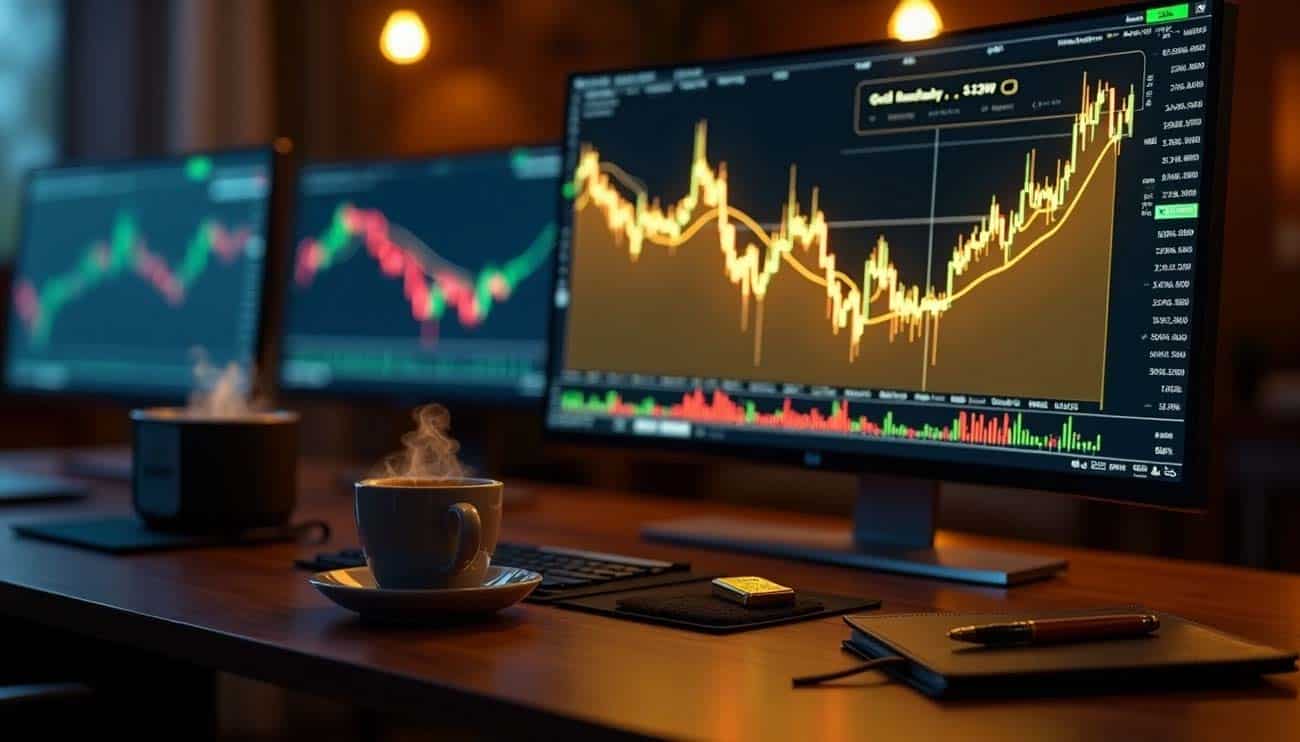
Gold and interest rates are closely linked through what economists call opportunity cost. A bar of gold earns nothing, so when a safe Treasury bond pays 5%, holding gold means giving that up. When rates fall, the cost of holding gold shrinks and demand tends to rise.
The rate that matters most is the real rate: the bond yield minus inflation. Investors often watch the 10-year real Treasury yield, which measures exactly that. For roughly two decades, gold tended to rise when real yields fell and fall when they rose.
That pattern broke in 2022. Real rates rose sharply, which should have hurt gold, yet gold kept climbing because central banks and Asian buyers bought heavily regardless of yields. The link between gold and interest rates still matters, but it now competes with other forces.
Rate cuts, or even the expectation of them, still tend to help gold. That is why gold prices often jump on the day the Federal Reserve signals that cuts are coming.
Investor Flows and Gold ETFs
Since the first large gold exchange-traded funds launched in 2004, investors have been able to buy gold as easily as a share. That made gold far more responsive to sentiment. Western investors, who hold most ETF gold, tend to buy when rates fall and sell when stocks are strong, and their flows can swing by hundreds of tonnes in a year.
Buyers in Asia behave differently. They are more likely to buy physical bars, coins and jewelry, and more likely to buy on price dips. When Western investors sell and Asian buyers step in, gold can hold up better than rate moves alone would suggest, as it did in 2022 and 2023.
The US Dollar
Gold is priced in dollars around the world, so a stronger dollar makes gold more expensive for buyers who hold euros, rupees or yuan, and demand from those buyers falls. A weaker dollar has the opposite effect. Our post on how a dollar rally moves gold walks through a real example, when gold fell 1.3% in a day as the dollar strengthened.
Central Banks
Central banks are the biggest change in the gold market this decade. They bought more than 1,000 tonnes a year in 2022, 2023 and 2024, roughly double their pace of the previous decade, led by China, Poland, India and Turkey. They buy to diversify away from the dollar and to hold a reserve asset that no other government controls.
Because central banks rarely sell and do not react to short-term prices, their buying acts like a floor under the market. It is a large part of why gold kept rising even when interest rates went up. We look at this in more detail in why gold prices ease after a peak.
Gold Supply and Demand
Gold supply and demand works differently from most commodities. Almost all the gold ever mined still exists, around 216,000 tonnes, so a year’s new supply is small next to the total. Mines produce roughly 3,600 tonnes a year, and recycling adds more than 1,000 tonnes, much of it old jewelry sold back to jewelers and refiners.
On the demand side, the main buyers are:
- Jewelry: close to 2,000 tonnes a year, led by India and China, and the most price-sensitive buyer.
- Investment: bars, coins and gold ETFs, which can swing by hundreds of tonnes as sentiment changes.
- Central banks: more than 1,000 tonnes a year recently.
- Technology: a few hundred tonnes for electronics and dentistry.
Because mine output changes slowly, gold supply and demand is balanced mostly by price. When gold rises, jewelry buying falls and recycling climbs as people sell old pieces, which helps cool the market. You can explore the numbers on the World Gold Council’s supply and demand data.
That recycling point matters to sellers. A high price is exactly when the most people sell old gold, and it is why record gold prices bring so much jewelry back into the market.
Mining Costs and New Supply
Gold miners cannot quickly raise output when prices climb. A new mine typically takes ten to twenty years from discovery to production, and many of the richest deposits have already been found. That slow response is one reason gold supply and demand is balanced by price rather than by new production.
Mining costs also rise over time as ore grades fall and energy and labor get more expensive. The all-in cost of producing an ounce has climbed well above $1,000 for most large miners, which tends to set a rough long-term floor: if gold fell far below it, output would shrink. It does not set a ceiling, which is why gold supply and demand can push prices far above production costs in a strong market.
Gold Price Seasonality
Gold price seasonality is real, but it is small. Physical demand follows the calendar: jewelry buying rises before Chinese New Year in January and February, around Akshaya Tritiya in spring, and through India’s festival and wedding season from roughly October to December.
Historically, January has often been one of gold’s stronger months and early summer one of its softer stretches. But gold price seasonality is easily swamped by news. A single inflation report or central bank decision can move gold more in a day than seasonal demand does in a month.
For sellers, the practical takeaway is simple: gold price seasonality is not a reliable reason to wait. Watch the price itself rather than the calendar.
Geopolitics and Uncertainty
Wars, trade disputes and political shocks send investors toward assets that do not depend on any one government or company. Gold rose on the tariff announcements of 2025 and on conflicts in Europe and the Middle East. These spikes can fade quickly if the crisis eases, but a long period of uncertainty, like the one since 2022, can keep a steady bid under gold.
We covered how tariffs fed the rally in our look at the gold price trend, and how debt worries lifted gold in gold prices surge past $3,300.
Five Big Moves That Show What Drives Gold Prices
Gold’s history is the clearest way to see these forces at work. Each major move had a different driver:
- 1971 to 1980, $35 to $850: the end of the gold standard and runaway inflation.
- 1980 to 2001, down to about $255: high real interest rates and falling inflation.
- 2001 to 2011, up to about $1,900: a weak dollar, the arrival of gold ETFs and the financial crisis.
- 2011 to 2015, down to about $1,050: recovering stocks and expectations of higher rates.
- 2022 to 2025, from under $2,000 to over $4,000: record central bank buying, inflation and geopolitical shocks.
The same handful of forces keep reappearing: inflation, interest rates, the dollar, and who is buying. Knowing what drives gold prices does not predict the next move, but it makes each one easier to understand.
Why Silver and Platinum Move Differently
Silver often follows gold, but more than half of silver demand comes from industry, especially electronics and solar panels, so it also rises and falls with factory activity. That makes silver more volatile than gold in both directions. Platinum depends even more on industry, mainly catalytic converters, and most of it is mined in just two countries, South Africa and Russia, so supply disruptions there can move its price sharply.
Gold is different because so much of its demand is monetary: investors, central banks and savers buying it as a store of value. That is why the forces in this guide matter more for gold than for its sister metals. For silver, see our guide to selling silver in Boca Raton.
Common Myths About Gold Prices
A few ideas about what drives gold prices come up again and again at our counter, and most of them are only half true:
- “Gold only goes up.” Gold lost more than half its value between 1980 and 2001 and fell about 45% from 2011 to 2015. Long flat or falling periods are normal.
- “Gold always rises in a crisis.” In the first days of a panic, investors sometimes sell gold to raise cash, as they did in March 2020, before buying it back.
- “Jewelry demand sets the price.” Jewelry is the largest source of demand by weight, but investors and central banks usually decide the direction.
- “Dealers set the price.” No local buyer sets the gold price. Every honest offer starts from the same global spot price; what differs is the share of it a buyer pays.
Understanding these limits is part of understanding gold and inflation, rates and demand: each force matters, but none works like a switch.
What This Means If You Own Gold

Understanding what drives gold prices will not tell you where gold goes next; nobody can do that reliably. It does help you avoid two common mistakes: panicking at a one-day drop, and holding out for a top that may not come.
- Check the spot price the day you sell. Offers are built from it, so it is your reference point.
- Separate what you love from what you do not wear. Keep the first; the second is what high prices are for.
- Consider selling in stages if you cannot decide, so you are not betting on a single day.
- Ask for a written record of the weight, karat and price paid for every sale.
For a deeper look at timing, see should you sell while gold prices are soaring, and for the mechanics of an offer, our guide on how to sell gold.
Selling Gold at David Stern Jewelers
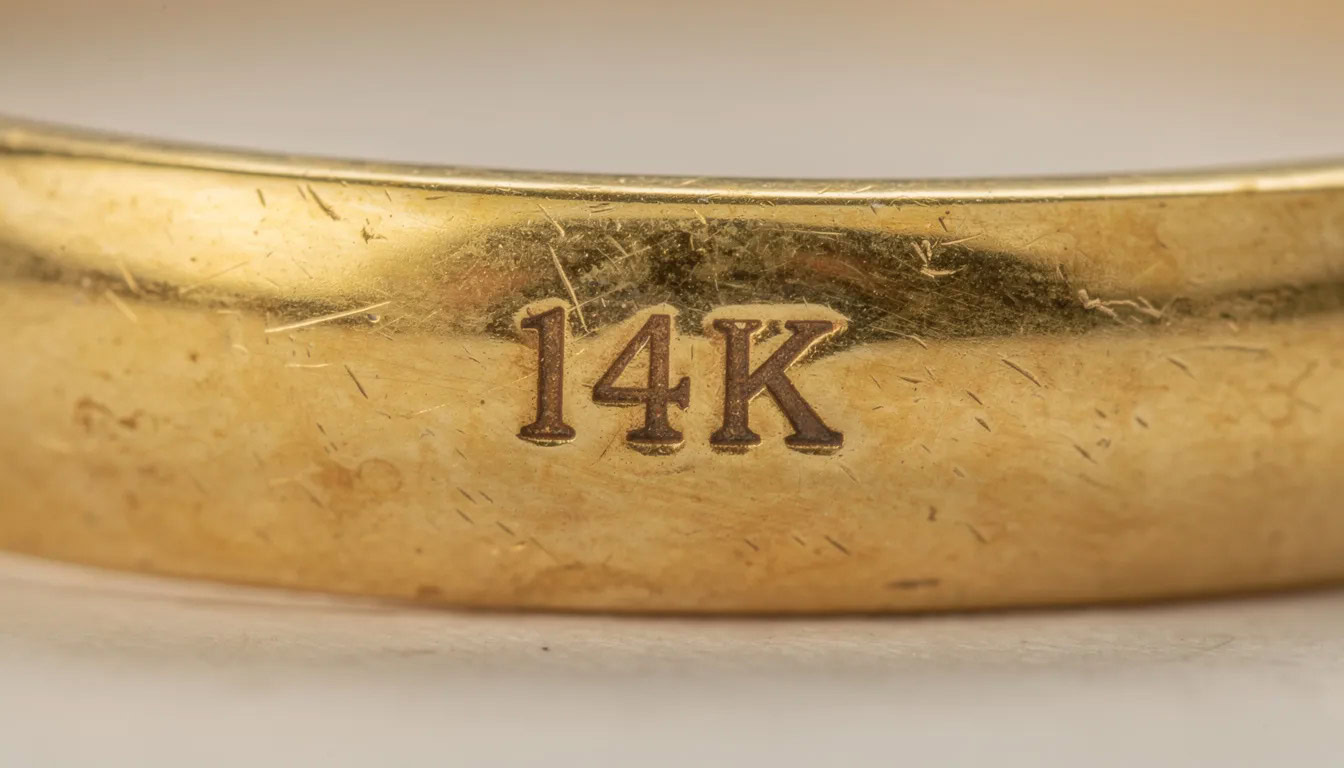
David Stern Jewelers has bought gold in Boca Raton for over 40 years from a permanent storefront. When you visit, we test and weigh each piece in front of you, sort it by karat, and show you the day’s spot price and the arithmetic behind the offer. If you accept, you are paid the same day; if not, everything goes home with you.
Because we are also jewelers with GIA-trained staff, we will tell you when a piece is worth more for its design, maker or stones than for its gold. You can learn more about how we buy gold in Boca Raton and how our jewelry buyers work. Bring a government-issued photo ID, which Florida law requires for every sale.
Quick Answers About What Drives Gold Prices
Why does gold go up when stocks go down?
Investors move money toward safety when they are worried about growth. Gold is not tied to any company’s earnings, so it often benefits when stocks fall, though in 2025 both rose together for long stretches.
Does gold always rise with inflation?
No. The link between gold and inflation is strongest when inflation is unexpected or confidence in policy is weak. In calmer periods gold can fall even while prices rise.
Why do interest rate cuts help gold?
Lower rates reduce what you give up by holding gold instead of an interest-paying bond. That is why gold and interest rates tend to move in opposite directions.
Is there a best month to sell gold?
Gold price seasonality exists but is weak. The day’s spot price and the percentage of melt a buyer pays matter far more than the month.
Why did gold keep rising when interest rates were high?
From 2022 onward, heavy central bank buying and strong demand in Asia outweighed the drag from higher real rates. The usual link between gold and interest rates weakened because a different kind of buyer was driving the market.
Do mining companies affect gold prices?
Only slowly. Mine output changes little from year to year, so new supply rarely moves the price on its own. Recycling of old jewelry reacts much faster to price than mining does.
Where can I see the current gold price?
The World Gold Council’s price history shows daily and long-term charts. When you visit us, we show you the live spot price used for your offer.
Talk to Us Before You Sell
Knowing what drives gold prices puts you in a stronger position when you decide to sell. Visit David Stern Jewelers at 21073 Powerline Rd, #37, Boca Raton, FL 33433, Monday through Friday 9:30 to 5:30 or Saturday 10:30 to 4:30, or call (561) 994-3330 with any questions. This article is general information, not investment advice.